Ad Copy Testing Analysis
Ad Copy Testing Analysis measures how different versions of your advertisements perform against each other, revealing which messaging, headlines, and calls-to-action drive the highest conversion rates. If you're struggling with low-performing ads, wondering why your ad copy testing is failing, or unsure how to systematically improve ad copy testing results, this guide will show you how to optimize ad copy performance through data-driven testing methodologies.
What is Ad Copy Testing Analysis?
Ad Copy Testing Analysis is the systematic process of comparing different versions of advertising copy to determine which performs best across key metrics like click-through rates, conversion rates, and cost per acquisition. This methodology involves running controlled experiments where audiences are exposed to different ad variations simultaneously, allowing marketers to make data-driven decisions about their messaging, headlines, calls-to-action, and creative elements. Understanding how to do ad copy testing effectively enables businesses to optimize their advertising spend and maximize return on investment by identifying the most compelling messages for their target audience.
The importance of ad copy testing analysis lies in its ability to remove guesswork from advertising decisions and provide concrete evidence about what resonates with customers. When ad copy testing results show high performance, it typically indicates strong audience engagement, relevant messaging, and effective calls-to-action that drive desired behaviors. Conversely, low-performing ad copy suggests misalignment between the message and audience needs, requiring iteration and refinement of the creative approach.
Ad copy testing methodology is closely interconnected with several critical metrics including Click-Through Rate (CTR), Conversion Rate, and Campaign Conversion Rate. These metrics work together to provide a comprehensive view of ad performance, while A/B Testing Analysis provides the statistical framework for valid comparisons. Additionally, Landing Page Performance Analysis often complements ad copy testing to ensure message consistency throughout the customer journey.
How to do Ad Copy Testing Analysis?
Ad copy testing methodology requires a structured approach to ensure reliable, actionable results. The key is establishing proper experimental controls while gathering sufficient data to make confident decisions about which copy variations drive better performance.
Approach: Step 1: Define test parameters (variants, audience splits, success metrics, and duration) Step 2: Run controlled experiments with equal traffic distribution across copy variants Step 3: Analyze performance differences using statistical significance testing
The foundation starts with clear hypothesis formation—what specific element are you testing (headline, call-to-action, value proposition) and what outcome do you expect? You'll need baseline performance data, defined audience segments, and predetermined success metrics before launching any tests.
Worked Example
Consider testing two ad copy variants for a SaaS product:
- Variant A: "Increase productivity by 40% with our project management tool"
- Variant B: "Stop missing deadlines—streamline your team's workflow today"
After running both variants to 10,000 impressions each over two weeks:
- Variant A: 320 clicks (3.2% CTR), 28 conversions (8.75% conversion rate)
- Variant B: 285 clicks (2.85% CTR), 31 conversions (10.88% conversion rate)
While Variant A generated more clicks, Variant B delivered higher conversion rates, resulting in 11% more conversions overall. This suggests benefit-focused messaging outperformed feature-focused copy for this audience.
Variants
Time-based testing runs variants sequentially, useful when traffic volume is limited but requires accounting for seasonal variations. Audience-based splits test different copy approaches across demographic segments, revealing which messages resonate with specific user groups. Multi-variate testing examines multiple elements simultaneously (headlines + CTAs + descriptions), providing deeper insights but requiring significantly larger sample sizes.
Common Mistakes
Insufficient sample sizes lead to false conclusions—ensure each variant receives enough traffic for statistical significance, typically requiring hundreds of conversions per variant. Testing too many variables simultaneously makes it impossible to identify which specific changes drove performance differences. Stopping tests prematurely when early results look promising often results in regression to the mean, where initial strong performance doesn't sustain over longer periods.
Stop Reading About Ad Testing, Start Analyzing
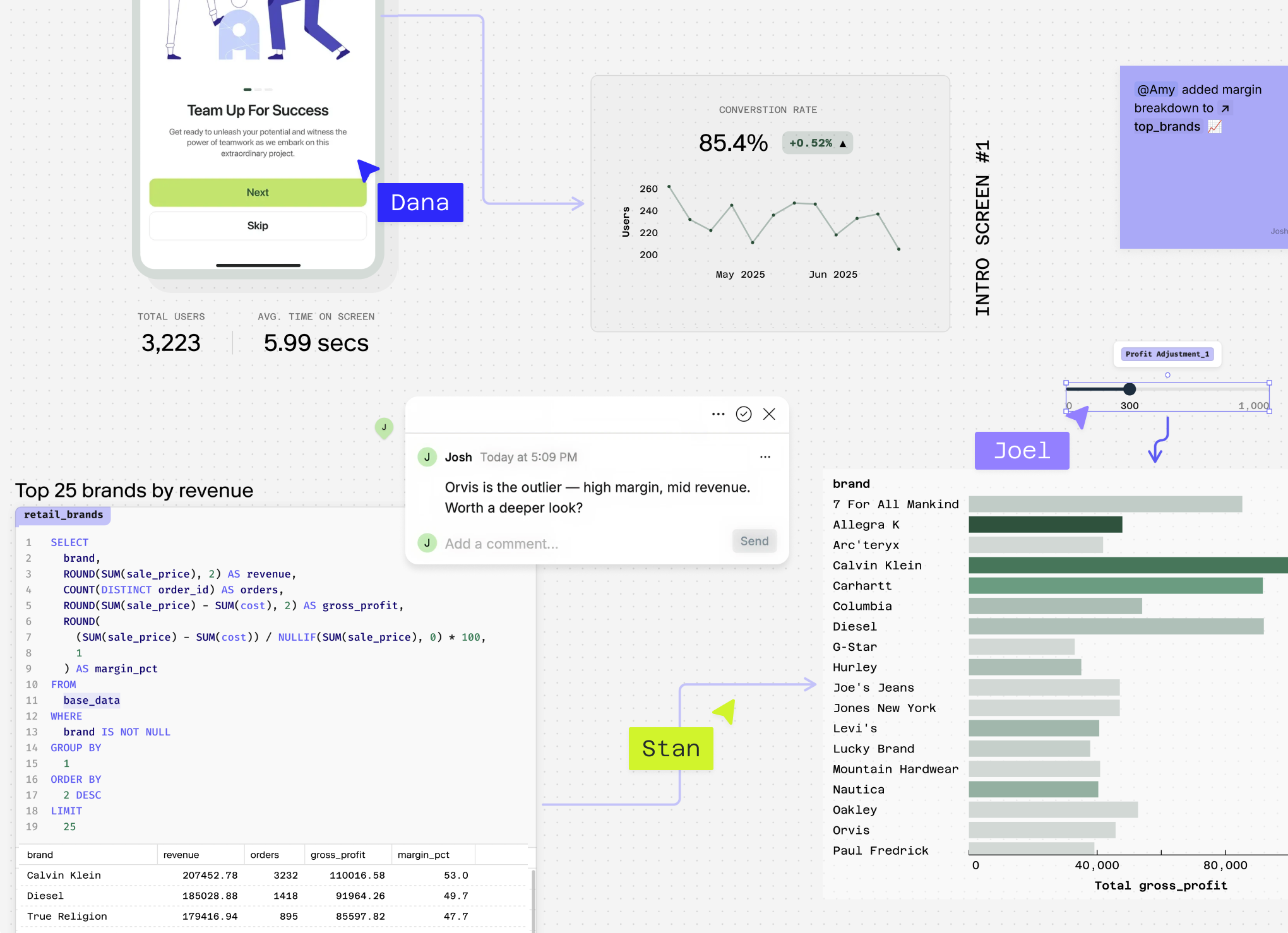
Connect your ad platforms and campaign data directly to Count's AI-powered canvas. Go from testing hypothesis to actionable insights in one collaborative session.
What makes a good Ad Copy Testing Analysis?
While it's natural to want benchmarks for ad copy performance, context matters significantly more than hitting specific numbers. Use these benchmarks as a guide to inform your thinking rather than strict targets to achieve.
Ad Copy Performance Benchmarks
| Industry | Stage | Business Model | CTR Range | Conversion Rate | Cost per Click |
|---|---|---|---|---|---|
| SaaS | Early-stage | B2B Self-serve | 2.5-4.0% | 3-7% | $3-8 |
| SaaS | Growth | B2B Enterprise | 1.8-3.2% | 5-12% | $8-25 |
| SaaS | Mature | B2B Mixed | 2.0-3.5% | 4-9% | $5-15 |
| Ecommerce | Early-stage | B2C | 3.0-5.5% | 2-5% | $1-4 |
| Ecommerce | Growth | B2C | 2.8-4.8% | 3-8% | $2-6 |
| Ecommerce | Mature | B2C | 2.5-4.2% | 4-10% | $3-8 |
| Fintech | Growth | B2B | 1.5-2.8% | 6-15% | $12-35 |
| Subscription Media | All stages | B2C | 4.0-7.0% | 8-20% | $0.50-3 |
Sources: Industry estimates based on WordStream, HubSpot, and Unbounce studies
Understanding Benchmark Context
These benchmarks help establish your general sense of performance—you'll know when something seems off. However, ad copy testing metrics exist in constant tension with each other. As you optimize one metric, others may decline. Rather than obsessing over any single number, consider your ad copy performance holistically alongside related metrics like customer acquisition cost, lifetime value, and overall campaign ROI.
How Related Metrics Interact
Ad copy testing results rarely exist in isolation. For example, if you're testing headlines that emphasize premium features versus cost savings, the premium-focused copy might generate lower click-through rates but attract higher-value prospects with better conversion rates and larger deal sizes. Similarly, ad copy targeting enterprise customers typically sees lower CTRs but higher conversion values compared to self-serve messaging. Your "good" performance depends entirely on your business model, target audience, and growth stage—not just industry averages.
Why is my ad copy testing failing?
When your ad copy testing isn't delivering clear winners or actionable insights, several underlying issues are typically at play. Here's how to diagnose what's going wrong:
Insufficient Sample Size Your tests are ending too early or don't have enough traffic to reach statistical significance. Look for overlapping confidence intervals between variants or results that flip-flop daily. This creates false conclusions about which copy performs better, leading to poor optimization decisions that actually hurt your conversion rates.
Poor Test Design You're testing too many variables simultaneously or making changes that are too subtle to detect. Signs include testing headline, CTA, and imagery all at once, or variants that differ by only a few words. This muddles your understanding of what drives performance and prevents you from building effective testing frameworks.
Audience Contamination Your test groups aren't properly isolated, meaning the same users see multiple variants. Watch for unusual traffic patterns or performance that doesn't align with your click-through rate (CTR) expectations. This skews results and makes it impossible to attribute performance changes to specific copy elements.
Misaligned Success Metrics You're optimizing for the wrong KPIs or not connecting ad performance to downstream results. If your A/B testing analysis shows winning copy that doesn't improve campaign conversion rates, you're likely measuring vanity metrics instead of business impact.
External Interference Seasonal changes, competitor actions, or platform algorithm updates are affecting your tests. Look for performance shifts that coincide with external events or unusual patterns in your landing page performance analysis. These factors can mask true copy performance and lead to incorrect conclusions about what resonates with your audience.
How to improve ad copy testing results
Establish Statistical Rigor Before Testing Calculate your required sample size upfront based on your baseline conversion rate and desired effect size. Use power analysis to determine how long tests need to run for reliable results. Most failed tests suffer from premature conclusions—commit to reaching statistical significance before making decisions. Track your progress in real-time to avoid the temptation to call winners early.
Isolate Variables Through Controlled Testing Test only one element at a time—headline, description, or call-to-action—never multiple changes simultaneously. This isolation lets you identify which specific changes drive performance improvements. Use A/B Testing Analysis frameworks to ensure proper randomization and eliminate confounding variables that muddy your results.
Leverage Cohort Analysis for Deeper Insights Segment your ad copy performance by audience cohorts, time periods, and traffic sources within your existing data. Often, a "losing" ad copy actually performs better for specific segments. Look for patterns in your Click-Through Rate (CTR) data across different demographics or device types before concluding tests have failed.
Align Copy with Landing Page Experience Analyze your Landing Page Performance Analysis alongside ad copy results. Disconnects between ad messaging and landing page content often explain why high-CTR ads have poor conversion rates. Test ad copy variations that better match your landing page value propositions to improve overall Campaign Conversion Rate.
Implement Continuous Testing Cycles Rather than one-off tests, establish ongoing testing schedules that build on previous learnings. Use your Google Ads data integration to identify underperforming segments and systematically test improvements. Document what works across different campaigns to accelerate future optimization efforts.
Run your Ad Copy Testing Analysis instantly
Stop calculating Ad Copy Testing Analysis in spreadsheets and struggling with manual A/B test comparisons. Connect your data source and ask Count to calculate, segment, and diagnose your Ad Copy Testing Analysis in seconds, giving you instant insights into which copy variations drive the highest conversion rates and ROI.
Explore related metrics
A/B Testing Analysis
Ad copy testing is fundamentally A/B testing applied to creative assets, so understanding broader A/B testing methodology helps you design more rigorous experiments and avoid common statistical pitfalls.
Click-Through Rate (CTR)
CTR is the primary success metric for most ad copy tests, as it directly measures how compelling your copy is at driving initial engagement before users reach your landing page.
Conversion Rate
While ad copy testing focuses on getting clicks, conversion rate reveals whether your copy is attracting the right audience who actually complete desired actions after clicking.
Landing Page Performance Analysis
Ad copy and landing pages work together as a system—optimizing copy without considering landing page alignment can lead to higher bounce rates despite better click-through performance.
Campaign Conversion Rate
Campaign conversion rate helps you understand whether your ad copy improvements are translating into meaningful business outcomes across your entire marketing funnel, not just at the click level.
Stop Reading About Ad Testing, Start Analyzing
Connect your ad platforms and campaign data directly to Count's AI-powered canvas. Go from testing hypothesis to actionable insights in one collaborative session.